Silvia Stringhini
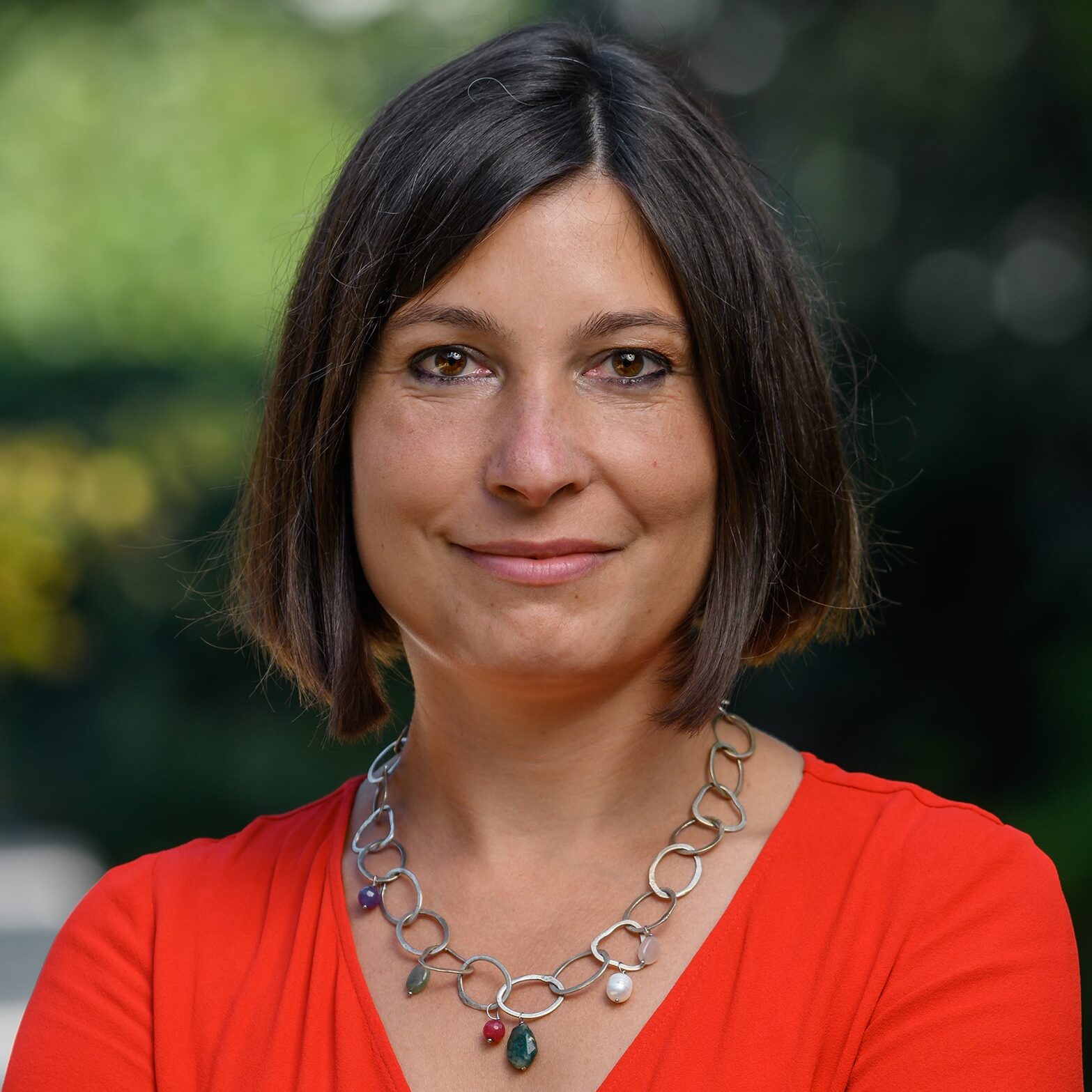
Academic Rank(s)
Professor, PhD
Division Head, Epidemiology, Biostatistics and Public Health Practice
Phone
silvia.stringhini@ubc.ca
Location
Dr. Silvia Stringhini is a Professor in the School of Population and Public Health at the University of British Columbia, where she leads the Stringhini Lab within the Edwin S.H. Leong Centre for Healthy Ageing (ELCHA). She is a Michael Smith Health Research BC Scholar and a Fellow of the Canadian Institute for Advanced Research (CIFAR) in the Child and Brain Development program. Before joining UBC in 2023, she was Head of the Unit of Population Epidemiology at the Geneva University Hospitals and Assistant Professor at the University of Geneva, where she retains an adjunct appointment.
A life-course social epidemiologist, Dr. Stringhini studies how socioeconomic disadvantage becomes biologically embedded across the life course, and how social and environmental exposures interact to shape trajectories of ageing. Her work spans epigenetic and multi-omic markers of biological ageing, allostatic load, inflammation, and the contribution of environmental exposures — including air pollution, heavy metals, and wildfire smoke — to social inequalities in health. She is currently PI of several CIHR- and CIFAR-funded programs examining unequal ageing trajectories, structural drivers of health inequalities, and early-life environmental pathways.
She holds a PhD in Epidemiology and Public Health from Université Paris/University College London, an MSc in Global Health from Trinity College Dublin, and an MSc in International Economics from the University of Pavia. She was a work package leader in the EU Horizon 2020 LIFEPATH consortium and, during the pandemic, led one of the first population-based SARS-CoV-2 seroprevalence studies worldwide and served on the Swiss National COVID-19 Science Task Force. She has published over 230 peer-reviewed papers, cited more than 16,000 times, in journals including The Lancet, JAMA, and BMJ.
Website: The Stringhini Laboratory
Prospective students. Dr. Stringhini is accepting MSc and PhD enquiries. She is looking for students with a solid background in epidemiology and quantitative methods, and welcomes enquiries in the following areas:
- social and environmental determinants of ageing trajectories, using longitudinal cohort data
- environmental and social pathways to biological ageing, using epigenetic and multi-omic data;
- early-life environmental exposures (wildfire smoke, air pollution, heavy metals) and their social patterning;
- quasi-experimental evaluation of policy changes on inequalities in health.
Applicants should have formal training in epidemiology, biostatistics, or a related quantitative discipline, and be comfortable working with large longitudinal datasets. Familiarity with causal inference, mediation, or quasi-experimental methods, and proficiency in R or Python, are strong assets. Interest in life-course and biological-embedding frameworks is important. Enquiries should include a CV, a brief statement of research interests, and an indication of which project area is the best fit.
Fellow, CIFAR – Child and Brain Development Program (2026–2030)
Michael Smith Foundation for Health Research / Health Research BC Scholar Award (2024–2029)
Leenaards Prize for Translational Medicine (2018)
Pfizer Award for Scientific Research, Pfizer Foundation (2017)
Maccacaro Prize for Young Italian Epidemiologist, Italian Association of Epidemiology (2013)
Social and Preventive Medicine Prize, University of Lausanne (2013)
Young Researcher in Clinical Science Award, University of Lausanne (2013)
Forum des 100 — one of the “100 personalities shaping French-speaking Switzerland” (2015)
Adjunct Professor, University of Geneva, Switzerland
Michael Smith Foundation Scholar
Fellow, Canadian Institute for Advanced Research (CIFAR)
Green College Scholar
Dr. Stringhini’s research program centres on social inequalities in ageing across the life course, and on the biological, environmental, and structural mechanisms that produce them. Current directions include:
- Unequal ageing trajectories — how socioeconomic circumstances across the life course shape the rate and timing of decline in physical function, cognition, and multisystem health, and which exposures explain the divergence between social groups. This work uses harmonised cross-national cohort data to compare how ageing gradients differ across welfare and policy contexts, and is supported by a CIHR program on environmental pathways, protective factors, and actionable levers in unequal ageing.
- Biological embedding of social disadvantage — epigenetic clocks, allostatic load, inflammation, telomere length, and multi-omic markers of accelerated ageing, examined from birth through later life to identify when and how social adversity registers biologically.
- Environmental pathways to health inequalities — the contribution of environmental exposures (air pollution, heavy metals, wildfire smoke) to social gradients in biological ageing and child health.
- Parental leave policy and health inequalities — Canada’s successive parental leave reforms (1990, 2000, and the 2017 extended-benefit option) offer a natural experiment for evaluating whether a major public investment in the early-life window narrows or widens health gaps. Because uptake of extended leave is strongly patterned by income, employment security, and employer top-ups, its benefits may concentrate among more advantaged families. This work uses the Canadian Community Health Survey, the Discharge Abstract Database, the BC Early Development Instrument, and the Parental Experiences Survey to estimate short- and long-term effects on maternal and child health across the socioeconomic gradient.
- Intersectionality and cumulative disadvantage — quantitative approaches (e.g., MAIHDA) to how socioeconomic status, migration, and racialization jointly shape health across the life course.
Dr. Stringhini teaches SPPH 527: Social Determinants of Health at UBC, and co-leads the online ELCHA course Fundamentals of Social Epidemiology Research: Current Theories and Methods. Her teaching spans social epidemiology, life-course epidemiology, the biological embedding of social inequalities, and global and environmental determinants of health. Over her career, she has supervised or co-supervised 10 PhD students, 9 postdoctoral researchers, and 7 Master’s students.